

Anthropic Unveils Claude Fable 5 with Built-In Cyber Safeguards as AI Security Enters a New Era
The latest AI model delivers advanced cybersecurity capabilities while adding controls designed to reduce misuse and support responsible adoption.
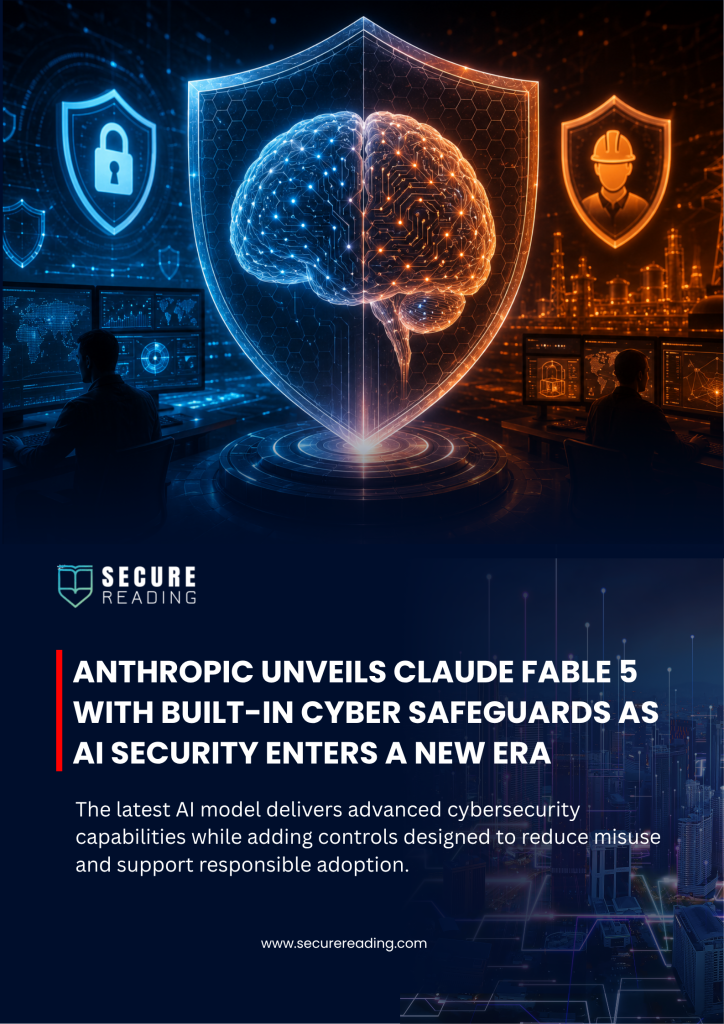
Artificial intelligence continues to transform cybersecurity. Anthropic's release of Claude Fable 5 marks another major step in that journey.
The company launched Claude Fable 5 on June 9 as its most advanced AI model so far. However, Anthropic took an unusual approach. Instead of releasing one version, it introduced two products based on the same core model.
Claude Fable 5 is available to the public and includes built-in safety controls. Meanwhile, Claude Mythos 5 remains available only to approved cybersecurity professionals and critical infrastructure operators. Anthropic says Mythos 5 offers unrestricted cybersecurity capabilities for trusted users.
This strategy reflects a growing challenge across the technology industry. AI models now perform cybersecurity tasks at a level that demands stronger safeguards and oversight.
How the Cyber Safeguards Work
Claude Fable 5 and Claude Mythos 5 share the same foundation. The main difference is a layer of AI-powered safety classifiers.
These classifiers monitor user requests and look for potentially harmful activity. When the system detects offensive cybersecurity tasks, it redirects the request to a less capable model. The platform also informs the user when this happens.
Anthropic designed this process to prevent misuse while still allowing most users to access advanced AI capabilities.
According to the company, the fallback mechanism activates in fewer than five percent of user sessions. As a result, most users experience the model's full capabilities without interruption.
Anthropic also acknowledges that some harmless requests may trigger the safeguards. The company plans to refine the classifiers and reduce false positives over time.
Why These Capabilities Matter
The release highlights how quickly AI-powered cybersecurity is advancing.
During earlier testing programs, Anthropic researchers used similar models to identify software vulnerabilities across multiple operating systems and applications. In some cases, the models discovered weaknesses that had remained unnoticed for years.
These results show how AI can automate tasks that once required significant expertise and time.
For defenders, this creates new opportunities. Security teams can identify vulnerabilities faster, improve code reviews, and strengthen testing processes.
However, attackers may also benefit from similar technology. As AI systems become more capable, they could help threat actors accelerate reconnaissance, exploit development, and attack planning.
Therefore, security leaders must prepare for a future where both defenders and attackers have access to powerful AI tools.
Benefits for Security Teams
Organizations already use advanced AI models to improve vulnerability management and security testing.
Participants in Anthropic's cybersecurity programs reportedly discovered thousands of high- and critical-severity vulnerabilities. These findings helped organizations strengthen their defenses before attackers could exploit weaknesses.
AI can dramatically reduce the time required to find security flaws. However, fixing those flaws still requires human expertise.
As a result, many organizations now face a new challenge. They can discover vulnerabilities faster than they can patch them.
This shift changes how security teams must prioritize their resources. Rapid remediation is becoming just as important as rapid detection.
The Need for Faster Patching
One of the biggest lessons from Anthropic's research involves speed.
AI-assisted systems can reduce the time between vulnerability disclosure and active exploitation. In some situations, attackers may create working exploits within hours rather than weeks.
Organizations can no longer rely on long response windows.
Security teams should prioritize updates for internet-facing systems and critical infrastructure. They should also strengthen monitoring, logging, and incident response processes.
Additionally, organizations should review their patch management programs and ensure they can respond quickly to newly disclosed vulnerabilities.
The faster teams deploy fixes, the lower the risk of successful exploitation.
New Data Retention Rules
Anthropic also introduced a new data retention policy for its highest-capability models.
The company will retain traffic from Claude Fable 5, Mythos 5, and future models in the same category for 30 days.
Anthropic states that it will use the data only for safety monitoring and threat detection. The company also says it will not use the information for model training.
Organizations with strict compliance requirements should review this policy carefully. Data retention requirements often play an important role in AI adoption decisions.
Looking Ahead
The launch of Claude Fable 5 highlights a broader shift in cybersecurity and artificial intelligence.
AI models can now discover vulnerabilities, support security testing, and accelerate defensive operations. At the same time, they can increase risks if attackers gain access to similar capabilities.
Anthropic's safeguard model represents one attempt to balance innovation and security. Whether other AI providers adopt a similar approach remains unclear.
For CISOs, security teams, and business leaders, the message is simple. Strong cybersecurity fundamentals remain essential. Rapid patching, continuous monitoring, multi-factor authentication, and effective incident response programs will become even more important as AI capabilities continue to grow.