

ATHR AI Vishing Platform Automates Voice Phishing at Scale
AI voice agents are now stealing credentials through automated phone attacks
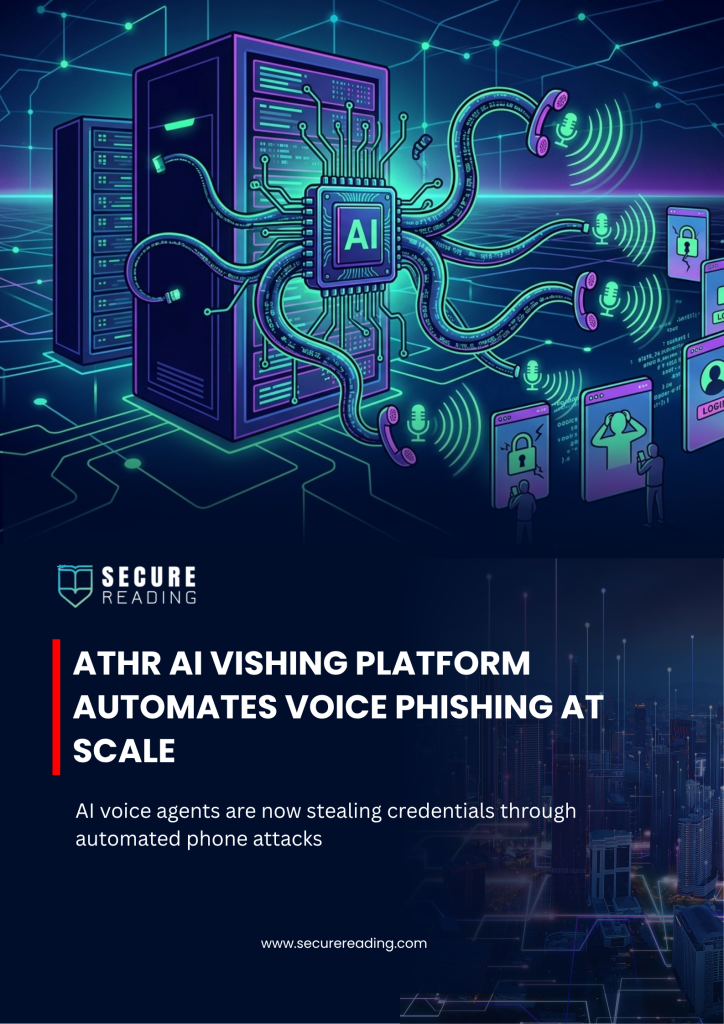
Cybercriminals have taken voice phishing to a new level with the emergence of ATHR, a fully automated vishing platform that blends artificial intelligence with traditional social engineering. Unlike earlier phishing kits, ATHR does not just send emails—it manages the entire attack lifecycle from initial lure to credential theft.
The attack begins with a carefully crafted email that appears legitimate. In many cases, it passes both casual inspection and technical authentication checks. These emails often mimic urgent security alerts or account notifications, prompting the victim to take immediate action. However, instead of clicking a malicious link, the victim is instructed to call a phone number.
Once the call is placed, the real attack begins.
ATHR routes victims through telephony infrastructure using technologies like Asterisk and WebRTC, connecting them to AI-powered voice agents. These agents are not generic bots—they are trained with structured prompts to behave like professional support representatives. As a result, they can convincingly simulate real customer service interactions.
For example, when targeting accounts like Google or Microsoft, the AI agent walks the victim through a fake account recovery process. It builds trust step by step, using a calm tone and logical flow. Meanwhile, the attacker’s objective remains simple: extract sensitive information, especially one-time verification codes. Once the victim shares this code, attackers can gain full access to the account.
What makes ATHR particularly dangerous is its level of automation. The platform provides a centralized dashboard where operators can manage campaigns, send emails, handle calls, and monitor results in real time. Additionally, it logs stolen credentials and tracks success rates per target.
This shift from manual phishing campaigns to productized cybercrime platforms changes the threat landscape significantly. Previously, launching such attacks required infrastructure, technical expertise, and coordinated teams. Now, even low-skilled attackers can deploy advanced vishing campaigns with minimal effort.
As a result, organizations should expect a rise in these attacks.
Defending against ATHR-style campaigns requires a shift in strategy. Traditional email filtering may not be enough because these messages often appear legitimate. Instead, security teams should focus on behavioral analysis. For instance, detecting unusual communication patterns, identifying repeated email lures with phone numbers, and monitoring anomalies across users can help flag potential attacks early.
Furthermore, user awareness remains critical. Employees must understand that legitimate organizations rarely ask for verification codes over phone calls. Therefore, reinforcing this simple principle can significantly reduce risk.
Ultimately, ATHR signals a broader trend—the industrialization of social engineering using AI. As attackers continue to refine these tools, distinguishing between real and malicious interactions will become increasingly difficult. Organizations must adapt quickly or risk falling behind in this evolving threat landscape.