

What Is Wiper Malware in Cybersecurity? Understanding One of the Most Destructive Types of Cyber Attacks
How Wiper Malware Works and Why Organizations Must Prepare for Data-Destruction Cyber Threats
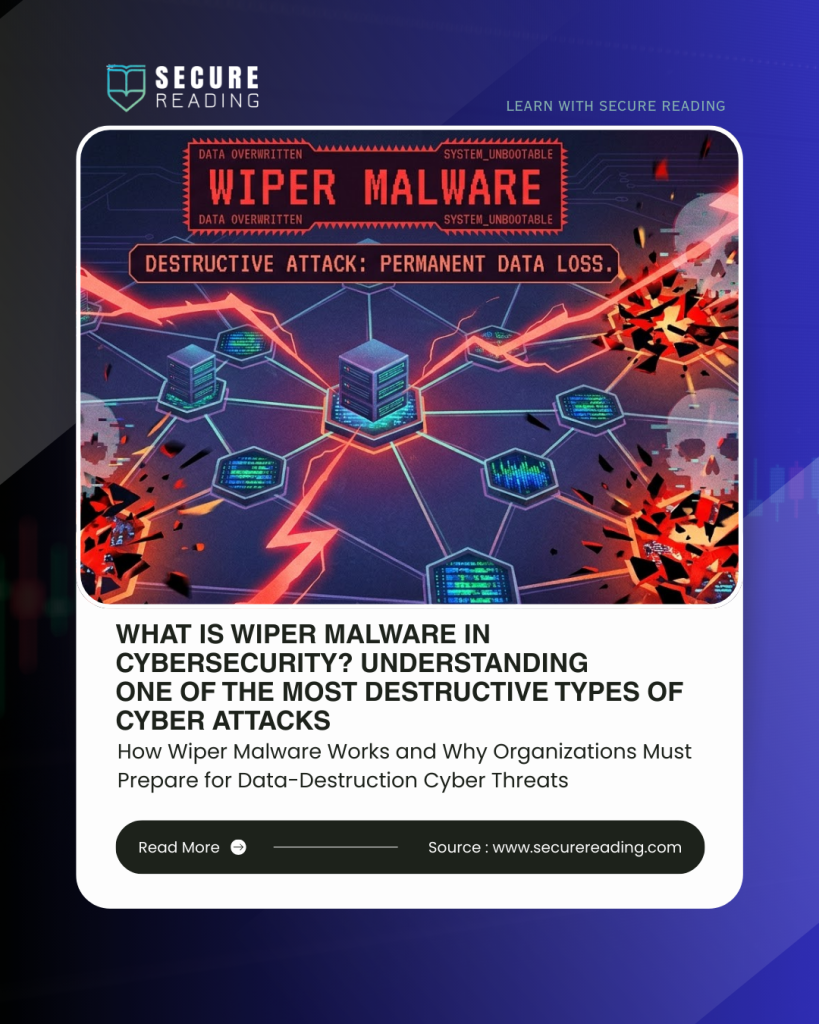
As cyber threats continue to evolve, organizations face many types of attacks. Some attackers steal data, while others demand ransom payments. However, another category of malware focuses on pure destruction rather than financial gain.
This type of threat is known as wiper malware.
Wiper malware is designed to permanently erase data from computers, servers, or entire networks, making recovery extremely difficult. In many cases, organizations lose critical data and systems within minutes of infection.
What Is Wiper Malware?
Wiper malware is a type of malicious software that destroys data by deleting or overwriting files, system structures, or entire storage devices.
Unlike ransomware, which encrypts files and demands payment, wiper malware focuses on destroying data completely.
The main goal of a wiper attack is usually:
- Disruption of operations
- Destruction of critical systems
- Sabotage of infrastructure
- Political or geopolitical impact
Because of this destructive nature, wiper malware is often used in cyber warfare and nation-state attacks.
How Wiper Malware Works
Wiper malware usually enters a system through common cyberattack techniques. Once inside the network, it begins deleting or corrupting data.
The attack typically follows several stages:
Initial Access
Attackers first gain access through methods such as:
- Phishing emails
- Exploiting vulnerabilities
- Compromised credentials
- Remote access tools
Lateral Movement
Next, the malware spreads across the network. It attempts to reach multiple systems, including servers and backups.
Attackers often move through:
- Domain controllers
- Shared network drives
- administrative accounts
Data Destruction
Finally, the malware begins destroying data. It may:
- Overwrite files with random data
- Delete partitions or file systems
- Corrupt the Master Boot Record (MBR)
- Wipe entire disks
Once this stage begins, recovery becomes extremely difficult.
Real-World Examples of Wiper Malware
Several major cyberattacks have used wiper malware to cause large-scale damage.
Shamoon
One of the most famous wiper attacks targeted Saudi Aramco in 2012. The Shamoon malware wiped data from more than 30,000 computers, severely disrupting operations.
NotPetya
Initially disguised as ransomware, NotPetya was actually a destructive wiper. The attack spread globally in 2017 and caused billions of dollars in damage to companies worldwide.
WhisperGate
WhisperGate targeted Ukrainian government systems in 2022. The malware destroyed system files and made affected systems unusable.
Why Wiper Malware Is Dangerous
Wiper malware is particularly dangerous because it focuses on destruction rather than profit.
This means attackers usually do not provide a way to recover the data.
Organizations may face:
- Permanent loss of critical business data
- Shutdown of systems and infrastructure
- Long recovery times
- Financial and reputational damage
In some cases, companies must rebuild entire IT environments from scratch.
How Organizations Can Protect Against Wiper Malware
Although wiper malware is destructive, organizations can reduce the risk by strengthening their cybersecurity defenses.
Important security measures include:
Maintain Offline Backups
Offline or air-gapped backups allow organizations to restore systems after a destructive attack.
Patch Systems Regularly
Attackers often exploit known vulnerabilities. Therefore, regular patching helps reduce attack opportunities.
Monitor Network Activity
Security monitoring tools such as EDR and SIEM platforms can detect unusual behavior before a destructive attack spreads.
Implement Strong Access Controls
Limiting administrative access reduces the chance that attackers can move across the network.
Final Thoughts
Wiper malware represents one of the most destructive cyber threats organizations can face. Unlike other attacks, the goal is not financial gain but maximum disruption and damage.
As geopolitical tensions and cyber warfare increase, organizations must prepare for these attacks by strengthening cybersecurity monitoring, backup strategies, and incident response plans.
Understanding how wiper malware works is an important step in building resilient and secure digital infrastructure.