

ATM Jackpotting Goes Global as Hackers Use Malware to Empty Cash Machines
Dozens of suspects face charges after investigators uncover a coordinated malware campaign that forced ATMs to dispense cash on demand.
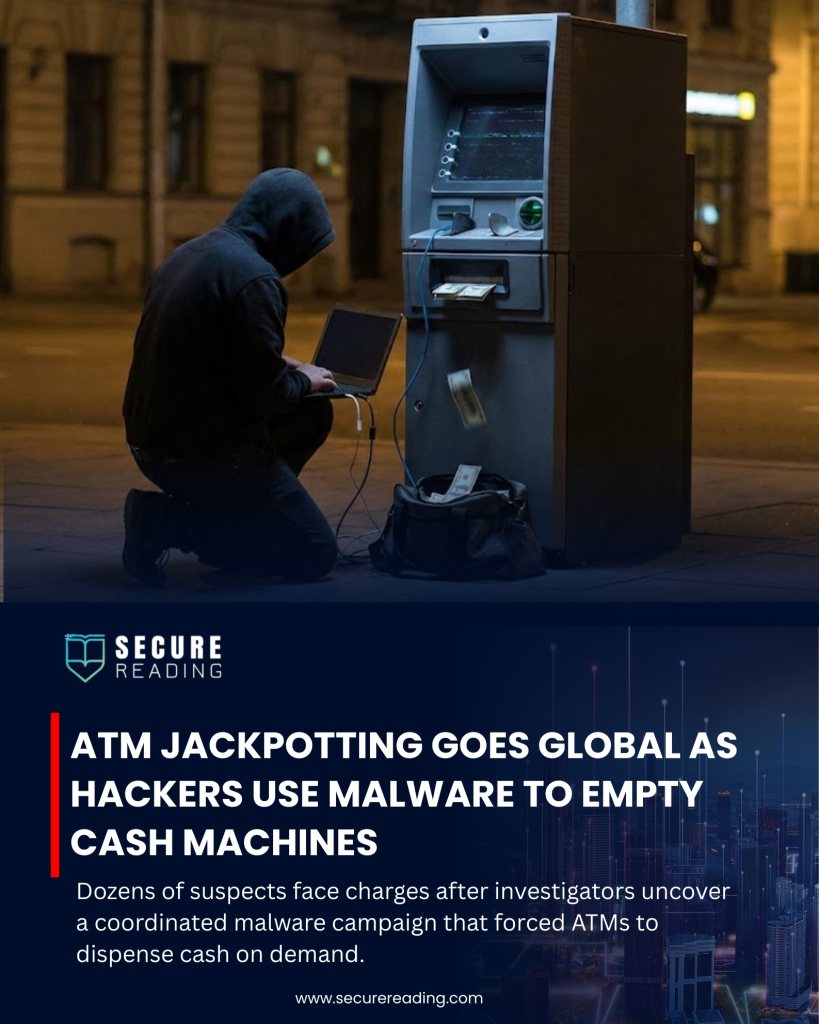
A large-scale ATM jackpotting operation has been exposed after investigators uncovered a coordinated campaign that used malware to remotely control ATM machines and drain cash.
Authorities have now expanded the case, charging dozens of additional individuals connected to a transnational criminal network that blended physical access with cyber techniques to steal millions from financial institutions.
How the ATM Jackpotting Attacks Worked
The attackers relied on Ploutus malware, a well-known ATM threat that enables direct control over cash-dispensing functions.
According to investigators, the operation followed a repeatable playbook:
- Attackers opened ATM housings after hours
- Malware was installed via hard drive replacement or USB devices
- Alarm responses were monitored before activation
- The malware forced ATMs to dispense cash continuously
- Logs and evidence were deleted to slow detection
This approach allowed rapid theft while minimizing on-site time.
Organized Cybercrime Meets Physical Access
Many of the accused individuals are linked to Tren de Aragua, a criminal network that has expanded from traditional crime into technology-enabled financial attacks.
Investigators say the group used malware expertise, coordination, and money-laundering networks to scale the operation across multiple banking environments.
Why ATM Jackpotting Remains Effective
Despite modern banking defenses, ATM jackpotting continues to succeed because:
- Many ATMs still run legacy operating systems
- Physical access controls remain inconsistent
- Malware can operate offline, bypassing network security
- Detection often occurs after cash is already gone
Once installed, jackpotting malware turns an ATM into a cash vending machine for attackers.
Financial Impact and Legal Fallout
Prosecutors allege that:
- Millions in cash were stolen
- Proceeds were split using predefined sharing rules
- Funds were moved internally to launder profits
In total, 87 individuals have now been charged, with potential prison sentences ranging from decades to life imprisonment if convicted.
What This Means for Banks and ATM Operators
This case reinforces a growing reality:
- Cyber threats are no longer purely digital
- Physical access + malware = high-impact financial loss
- ATM security must include tamper detection, behavioral monitoring, and rapid response
Institutions that treat ATMs as legacy infrastructure rather than critical cyber assets remain exposed.