

If a Cyber Attack Hits Tomorrow, Who in Your Company Owns the Risk?
Many organizations invest in security tools, but few clearly define who is responsible when something goes wrong.
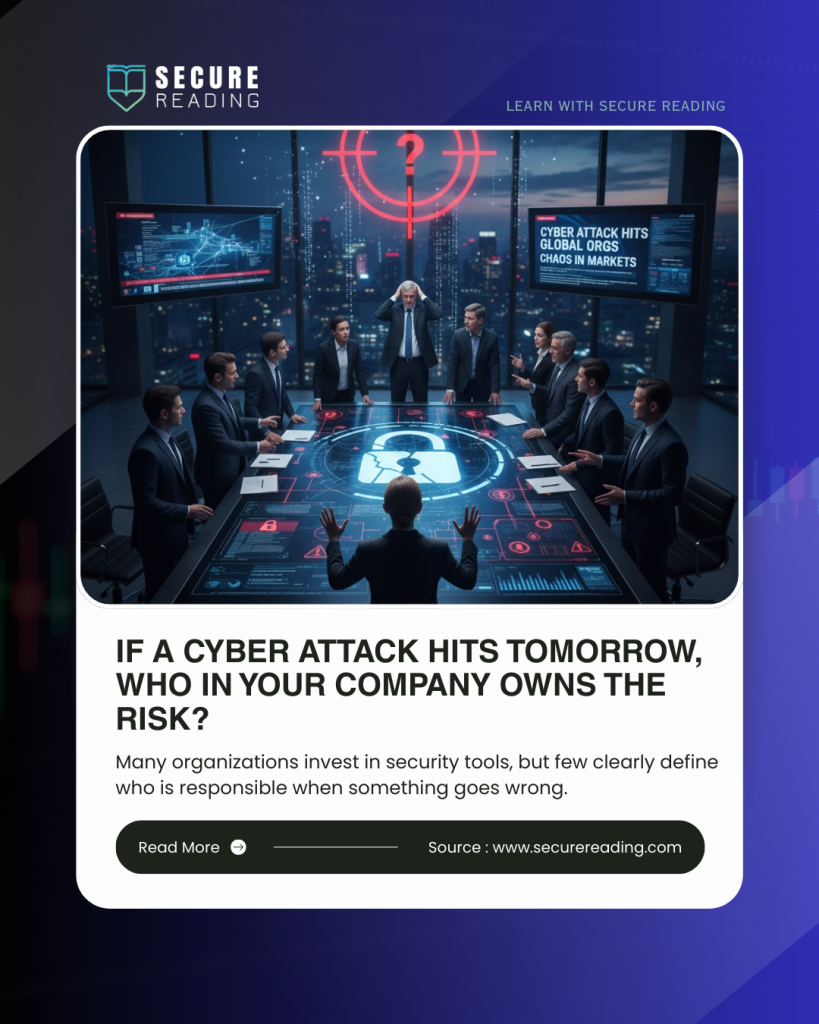
Most cyber incidents do not fail because of missing technology. Instead, they fail because responsibility is unclear. When an attack happens, teams scramble to answer basic questions: Who should respond first? Who makes decisions? Who communicates with customers, regulators, or leadership?
In many organizations, cybersecurity sits in a grey zone between IT, leadership, and operations. IT teams manage tools, executives manage risk, and business units manage data. However, without clear ownership, critical decisions slow down during an incident. As a result, attackers gain time, damage spreads, and recovery costs rise.
Another challenge is decision authority. During an attack, teams must decide whether to shut down systems, isolate users, or stop business operations temporarily. These decisions affect revenue and customers. Therefore, they cannot remain purely technical choices. When leadership has not defined escalation paths in advance, hesitation becomes a vulnerability.
Cyber risk also extends beyond systems. Legal exposure, regulatory reporting, brand trust, and customer confidence all come into play. If these factors are not mapped before an incident, organizations react under pressure rather than strategy.
Businesses that handle incidents well share one trait: clarity. They know who owns cyber risk, who leads incident response, and how technical teams align with business priorities. This clarity does not eliminate attacks, but it drastically reduces chaos and downtime.
Cybersecurity maturity is not measured only by tools or certifications. It is measured by how quickly and confidently an organization can respond when things go wrong. Clear ownership, defined roles, and practiced decision-making separate resilient businesses from vulnerable ones.
The real question is not if an attack will happen. It is whether your organization knows exactly who is accountable when it does.