

Is Freelancing in Cybersecurity a Real Career Option in Today’s Digital Economy?
As cyber threats grow and organizations look for flexible security expertise, many professionals are exploring whether freelancing in cybersecurity can become a stable and long-term career path.
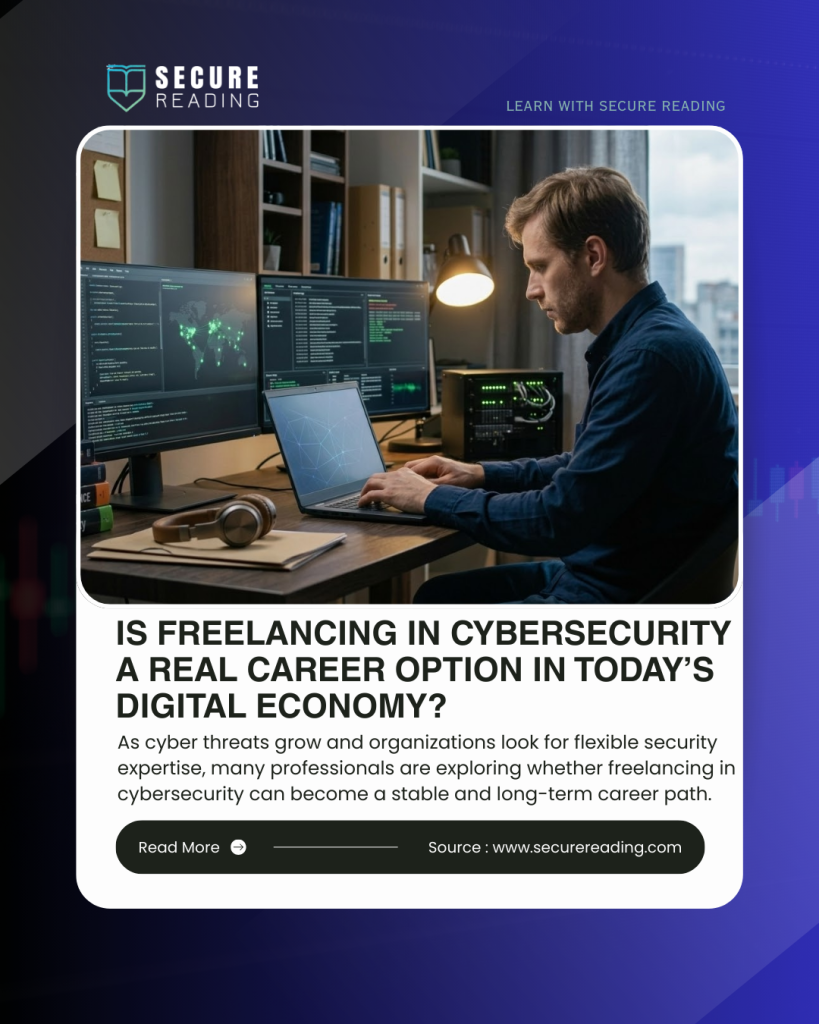
Cybersecurity is often associated with full-time roles inside security operations centers, consulting firms, or large enterprises. However, the rapid growth of digital infrastructure has created new opportunities for professionals who want to work independently.
Today, many companies need cybersecurity expertise for short-term projects, specialized assessments, and incident response support. As a result, freelancing has started to emerge as a viable option for experienced professionals in the field.
Why Freelancing Is Growing in Cybersecurity
Organizations across industries face increasing cyber risks. At the same time, there is a global shortage of skilled cybersecurity professionals.
Because of this gap, many businesses prefer to hire independent experts for specific tasks instead of maintaining large in-house teams. Freelancers can provide expertise when companies need it most, without long-term employment commitments.
Common freelance cybersecurity projects include:
- Security assessments and vulnerability scanning
- Penetration testing engagements
- Cloud security reviews
- Security policy development
- Incident response support
- Security awareness training
These services allow freelancers to work with multiple clients across different industries.
Skills That Freelance Cybersecurity Professionals Need
Freelancing requires more than technical knowledge. Professionals must combine security expertise with strong communication and project management skills.
Successful freelancers often develop capabilities in areas such as:
- Network and system security
- Vulnerability assessment and penetration testing
- Cloud security platforms
- Security monitoring and incident analysis
- Risk assessment and compliance frameworks
In addition to technical skills, freelancers must also manage client relationships, contracts, and project timelines.
Advantages of Freelancing in Cybersecurity
Freelancing offers several potential benefits for cybersecurity professionals.
Flexibility
Freelancers often have control over their schedules and projects.
Variety of Work
Independent professionals may work across multiple industries, technologies, and security challenges.
Global Opportunities
Many cybersecurity services can be delivered remotely, allowing professionals to work with clients worldwide.
Challenges to Consider
While freelancing can be rewarding, it also comes with challenges.
Income stability may vary depending on project availability.
Client acquisition requires effort, networking, and reputation building.
Freelancers also need to stay updated with rapidly evolving cybersecurity threats and technologies.
Because cybersecurity work often involves sensitive data, building trust and credibility with clients is essential.
When Freelancing Becomes a Strong Career Path
Freelancing in cybersecurity tends to work best for professionals who already have experience in areas such as:
- Penetration testing
- Cloud security engineering
- Security consulting
- Incident response
- Compliance and risk management
Experienced professionals can often build a strong reputation and attract clients through referrals and industry networks.
The Future of Freelance Cybersecurity
As organizations continue to adopt cloud computing, remote work, and digital platforms, the demand for cybersecurity expertise will continue to grow.
This trend may create more opportunities for independent professionals who can provide specialized security services.
For many professionals, freelancing may not replace traditional employment entirely, but it can become an important part of the evolving cybersecurity career landscape.