
French Government Messaging Platform Breached Through Account Hijacking Attack
Attack on Tchap Highlights the Growing Risk of Identity-Based Intrusions in Government Systems
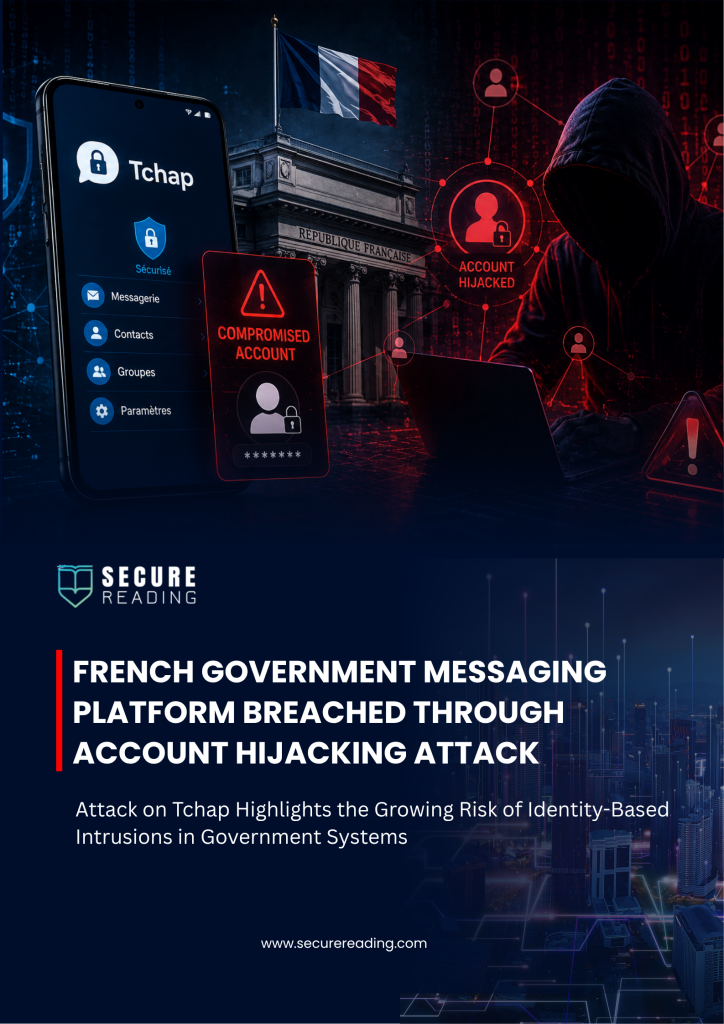
French authorities are investigating a security breach involving Tchap, the encrypted messaging platform used by government agencies and public sector employees. The incident occurred after attackers gained access to the platform through a compromised user account, raising concerns about the security risks posed by account hijacking and social engineering attacks.
The breach serves as another reminder that modern cyberattacks often target user identities rather than technical vulnerabilities. Even highly secured platforms can become vulnerable when attackers successfully compromise legitimate accounts.
What Is Tchap?
Tchap is the French government's secure messaging and collaboration platform. The service was developed by France's digital affairs directorate (DINUM) in partnership with the national cybersecurity agency ANSSI.
Built on the Matrix protocol, Tchap was designed to provide a sovereign communication platform for government employees and public institutions. The platform has grown significantly in recent years and now supports hundreds of thousands of users across the French public sector.
Its adoption accelerated after French authorities encouraged civil servants to use government-controlled communication tools instead of foreign messaging applications for official business.
How the Breach Occurred
According to DINUM, security teams detected suspicious activity after an attacker gained access to Tchap using a compromised user account.
Investigators quickly identified the affected account and blocked it to prevent further unauthorized access. Authorities have since launched a detailed forensic investigation to determine what information the attacker viewed or extracted.
Early reports suggest that the compromise may have originated from a social engineering attack. The threat actor claimed to have manipulated a legitimate user into providing access credentials, allowing them to enter part of the messaging ecosystem without exploiting a software vulnerability.
This detail is significant because it demonstrates how attackers increasingly bypass technical defenses by targeting people instead.
Potential Data Exposure Under Investigation
French authorities have notified the country's data protection regulator due to the possibility that personal information may have been exposed during the incident.
At this stage, investigators are reviewing logs and conversation records to determine the scope of the breach. Officials have not confirmed the full extent of data exposure.
However, the threat actor behind the incident has made several claims regarding the information allegedly accessed during the intrusion.
According to those claims, the attacker obtained:
- Internal documents and shared files
- User account information
- Email addresses
- Organizational details
- Meeting links
- Device and account metadata
- Large volumes of messaging data
The attacker also alleged that publicly shared files could be downloaded without additional authorization controls once media links became available.
Authorities have not independently confirmed all of these claims, and the investigation remains ongoing.
Why This Incident Matters
The Tchap breach highlights a growing cybersecurity challenge for governments worldwide. While organizations continue strengthening infrastructure security, attackers increasingly focus on identity-based attacks.
Account hijacking remains one of the most effective intrusion methods because it allows threat actors to operate as legitimate users. Once attackers gain access to a trusted account, many security controls become less effective.
Government communication platforms are especially attractive targets because they often contain sensitive operational information, policy discussions, and administrative data.
This incident also demonstrates that social engineering continues to be one of the most successful attack techniques. Attackers frequently achieve their objectives without deploying malware or exploiting software flaws.
Security Lessons for Public Sector Organizations
Government agencies and critical organizations can learn several important lessons from this breach.
First, identity protection must remain a top security priority. Strong passwords, multi-factor authentication, and continuous monitoring can reduce the likelihood of account compromise.
Second, organizations should regularly review access permissions and monitor unusual account activity. Early detection often limits the impact of an intrusion.
Third, users must understand the differences between public and private communication channels. Sensitive information should never be shared in spaces that allow broader access.
Finally, security awareness training remains essential. Even advanced platforms can become vulnerable when attackers successfully manipulate trusted users.
The Bigger Picture
The attack on Tchap reflects a broader shift in cyber threats targeting government institutions. Rather than focusing exclusively on technical vulnerabilities, threat actors increasingly pursue identity-based access through phishing, credential theft, and social engineering.
As governments continue investing in sovereign digital infrastructure, protecting user identities will become just as important as securing networks and applications.
The investigation into the Tchap breach remains ongoing. However, the incident already highlights a critical cybersecurity reality: a single compromised account can provide attackers with access to a much larger ecosystem than many organizations expect.