

Grafana GitHub Breach Linked to TanStack npm Supply Chain Attack
Grafana Labs confirms attackers accessed internal GitHub repositories after a compromised workflow token exposed source code and operational information.
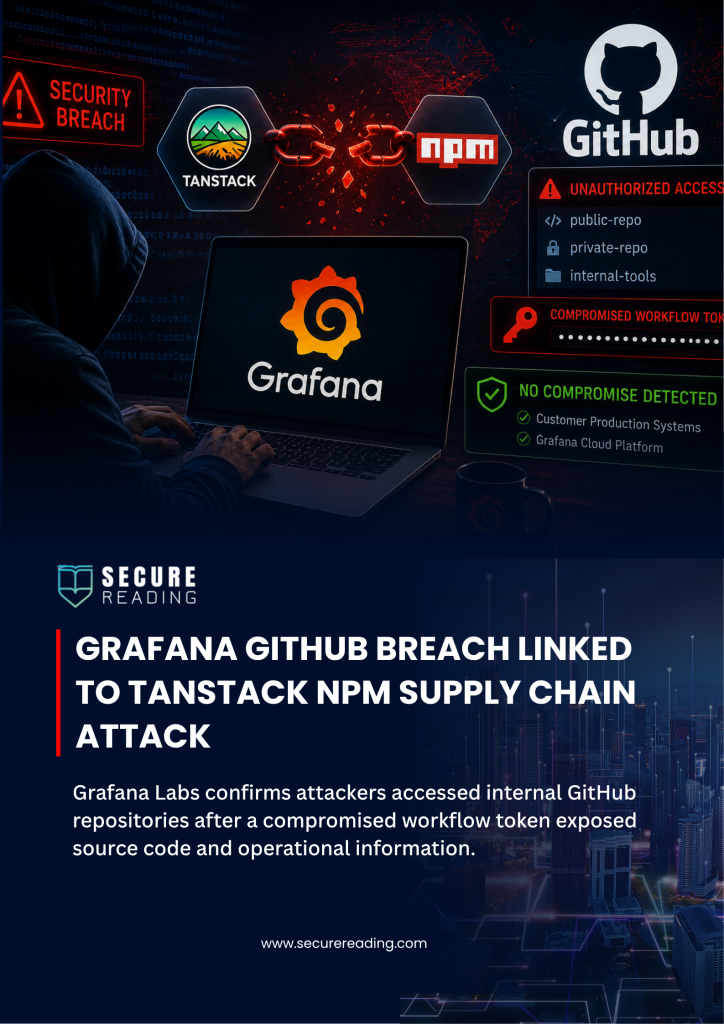
Grafana Confirms Internal Repository Exposure
Grafana Labs has confirmed a security breach linked to the recent TanStack npm supply chain attack. The company said attackers accessed parts of its GitHub environment, including public and private source code repositories.
However, Grafana stated that investigators found no signs of compromise inside customer production systems or the Grafana Cloud platform.
The company detected suspicious activity on May 11, 2026. Security teams quickly rotated several GitHub workflow tokens to stop the intrusion. Despite that response, one missed token allowed attackers to maintain access to internal repositories.
Grafana later discovered that a GitHub workflow initially marked safe had also been compromised.
Attack Connected to Wider Supply Chain Campaign
The breach connects to the larger TanStack npm supply chain attack campaign. Security researchers have already linked the same operation to incidents affecting OpenAI and Mistral AI.
The incident shows how software supply chain attacks continue to target major technology organizations. Attackers increasingly focus on developer environments, automation tools, and CI/CD pipelines instead of traditional endpoints.
According to Grafana, the attackers downloaded more than source code. Some repositories contained internal operational details and business collaboration information. The exposed data reportedly included professional contact names and email addresses used during normal business communications.
The company emphasized that the stolen information did not come from customer environments or production systems.
Grafana Rejects Extortion Demand
Grafana also revealed that an unnamed threat actor sent an extortion demand on May 16, 2026. The company refused to pay the ransom.
Executives stated that paying cybercriminals would not guarantee deletion of the stolen data. Additionally, the company warned that ransom payments often encourage future attacks.
Meanwhile, a cybercrime group known as CoinbaseCartel reportedly added Grafana Labs to its dark web leak site shortly after the incident became public.
Security Teams Strengthen GitHub Defenses
After the breach, Grafana introduced several new security measures. The company rotated more automation tokens and increased monitoring across GitHub environments.
Security teams also audited repository commits for malicious changes. In addition, the company strengthened GitHub security controls to reduce future risks.
The incident highlights a growing challenge for enterprises across the UAE, GCC, and global markets. Development platforms now represent a major attack surface for modern threat actors.
For CISOs and security leaders, the Grafana breach delivers an important warning. Even one exposed token can open access to sensitive repositories and internal operational data. Therefore, organizations must strengthen token management, monitor GitHub workflows, and secure third-party dependencies before attackers exploit them.