
Instagram Data Leak Exposes 17.5 Million Users — Why This Breach Is More Dangerous Than It Looks
Dark web exposure, API abuse, and silent exploitation raise serious concerns for users and organizations
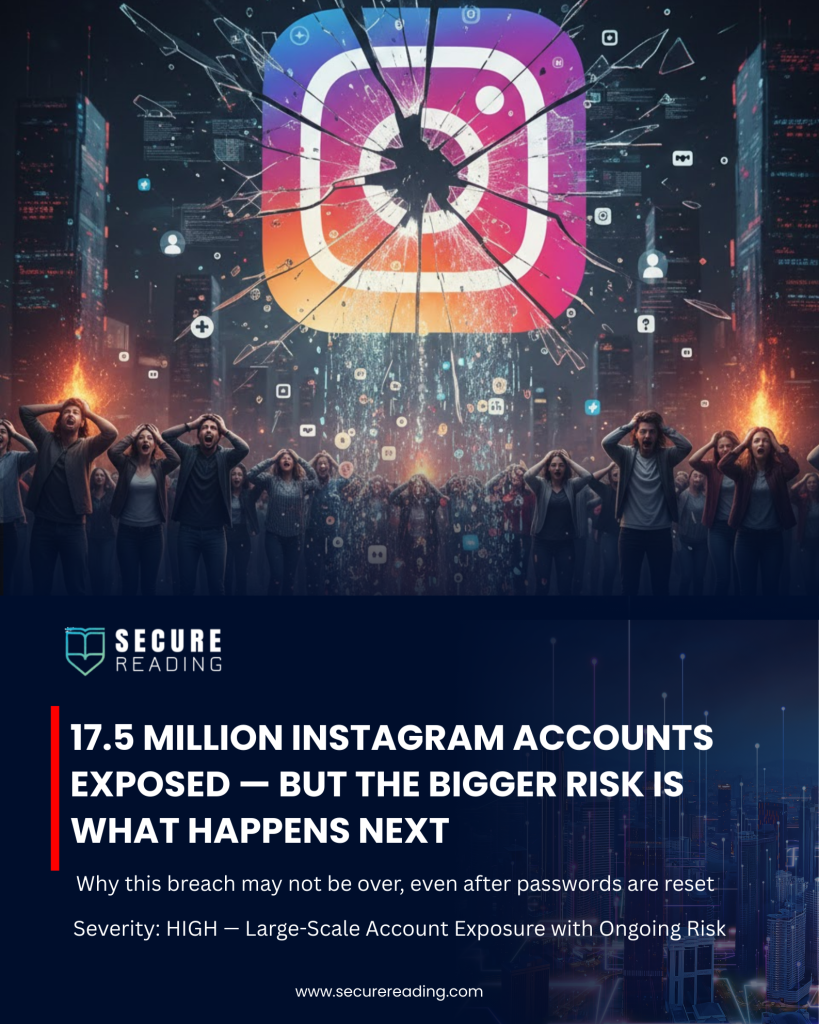
A large-scale Instagram data leak has surfaced after cybersecurity researchers uncovered structured datasets circulating on underground forums. The exposed files, shared openly and free of charge, contain detailed personal information linked to approximately 17.5 million users.
The leaked data appears in structured formats, suggesting it originated from an automated source rather than manual scraping. Early analysis indicates the information may trace back to a previously exposed Instagram API endpoint or an associated third-party service.
Data Exposed in the Leak
The dataset includes a broad range of sensitive user information, such as:
- Usernames and full names
- Email addresses
- International phone numbers
- Partial physical addresses
- User IDs and associated contact details
Even without passwords, this level of exposure significantly lowers the barrier for targeted cybercrime.
How the Breach Likely Happened
Investigators believe attackers harvested the data sometime in 2024. However, they only released it publicly this week, a tactic commonly used to maximize impact once detection becomes likely.
Forum posts promoting the dataset emphasized its “freshness,” which quickly drew attention from threat actors. This pattern aligns with previous incidents involving API misuse, where insufficient endpoint controls enabled large-scale data extraction without triggering alarms.
As a result, attackers now hold reliable, up-to-date identity data suitable for immediate exploitation.
Why the Risk Is Escalating Now
This breach does not end with exposure. Instead, it marks the beginning of secondary attack waves.
Already, users report receiving suspicious password reset emails and messages. Because the leaked data includes accurate contact details, attackers can craft highly convincing phishing attempts that impersonate Instagram or Meta support.
In addition, attackers may use real names and addresses to impersonate victims, hijack accounts, or attempt credential reuse across email, banking, and cloud platforms.
Key Threats Facing Affected Users
The exposed dataset enables several high-risk attack scenarios:
- Phishing campaigns using legitimate contact details
- Account takeover attempts through impersonation
- Credential reuse attacks against other services
- Identity abuse, including scams and doxxing
Because the data circulates freely, exploitation can scale rapidly and unpredictably.
Silence Raises Concern
Despite the scale of the exposure, users have not received breach notifications or clear mitigation guidance. The lack of public communication has raised concerns among security professionals, especially given prior warnings about API abuse risks.
Without timely alerts, many users remain unaware that their information may already circulate among attackers.
What Users Should Do Immediately
To reduce risk, users should take action without delay:
- Enable two-factor authentication using an authenticator app
- Change Instagram passwords and avoid reuse elsewhere
- Review login history and remove unknown sessions
- Revoke access for unused third-party apps
- Treat all security emails and messages with caution
- Use antivirus tools and consider a password manager
Early action can significantly limit follow-on damage.
Why Organizations Should Care
Employees often link social media accounts to corporate email addresses and devices. Attackers frequently exploit personal account breaches as a stepping stone for business-targeted social engineering.
For organizations, this incident reinforces the need for strong awareness programs and guidance around personal account security.