

Iranian Targeting of IP Cameras Raises Concerns for Physical Safety in the Middle East
Security analysts warn that the interplay between cyber intrusions and physical surveillance systems could expose critical locations and civilian infrastructure across the region
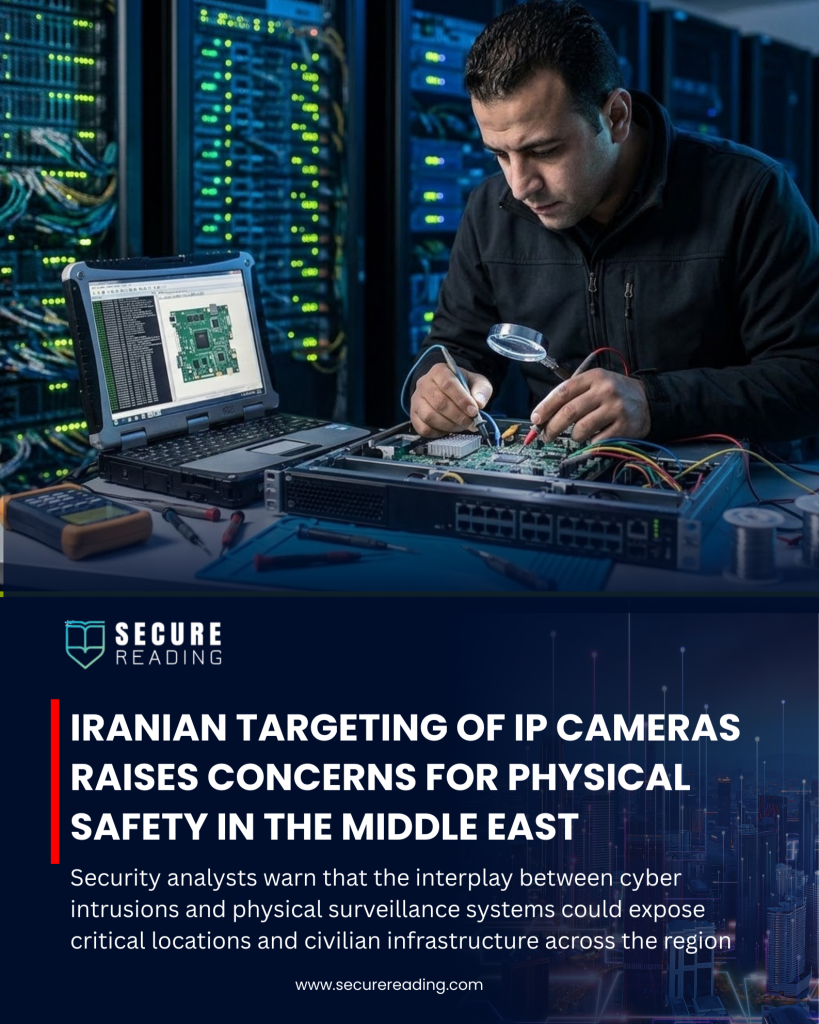
Cybersecurity researchers are raising concerns about the increasing targeting of internet-connected surveillance cameras by Iranian-linked threat actors, highlighting how cyber operations can directly influence physical security in the Middle East.
These cameras — often used in offices, ports, public infrastructure, and residential areas — can become valuable intelligence sources if compromised.
Why IP Cameras Are Becoming a Strategic Target
Internet Protocol (IP) cameras are widely deployed across modern infrastructure for monitoring facilities, traffic, industrial sites, and city environments.
However, many of these systems:
- Run outdated firmware
- Use weak default credentials
- Are exposed directly to the internet
- Lack proper network segmentation
When attackers gain access, they may obtain real-time visual insight into sensitive locations, including transportation hubs, energy facilities, or critical infrastructure.
This access could enable surveillance activities that support espionage, sabotage planning, or intelligence gathering.
Cyber Intrusions Can Influence Physical Security
Unlike traditional cyberattacks focused on data theft, compromising surveillance systems creates a direct connection between digital operations and physical outcomes.
For example, compromised cameras could allow attackers to:
- Observe security patrol routines
- Monitor entry and exit points of facilities
- Identify infrastructure vulnerabilities
- Track movement of personnel or vehicles
In high-tension geopolitical environments, such visibility may help adversaries coordinate physical or cyber disruptions.
Regional Security Concerns
The Middle East relies heavily on smart city technologies, connected surveillance networks, and industrial monitoring systems.
These systems are commonly deployed in:
- Airports and aviation infrastructure
- Oil and gas facilities
- Ports and logistics hubs
- Government buildings
- Public transportation systems
Because of their visibility into real-world environments, compromised cameras may expose operational patterns that could affect public safety and infrastructure protection.
Experts Warn of the Cyber-Physical Convergence
Security experts increasingly describe modern conflict as a cyber-physical convergence, where digital intrusions can influence real-world events.
Surveillance devices, smart sensors, and Internet-of-Things (IoT) infrastructure expand the attack surface that adversaries may exploit.
As a result, protecting these devices is no longer just an IT issue — it has implications for national security and civilian safety.
Recommended Security Measures
Organizations operating surveillance systems should consider the following actions:
- Remove cameras from direct internet exposure
- Change default credentials immediately
- Regularly update firmware and patches
- Segment surveillance networks from enterprise systems
- Monitor for unusual access attempts or outbound connections
These steps reduce the risk that surveillance infrastructure could be abused for reconnaissance or intelligence gathering.
The Bigger Picture
As geopolitical tensions evolve, cyber operations are increasingly used to complement traditional intelligence gathering. Compromising IP cameras illustrates how attackers can bridge the gap between digital access and real-world observation.
For organizations across the Middle East, strengthening the security of surveillance systems is becoming a critical component of overall risk management.