
Hackers Impersonate LastPass in Active Phishing Campaign Targeting Master Passwords
Fake maintenance emails push users toward malicious sites using urgency-driven tactics
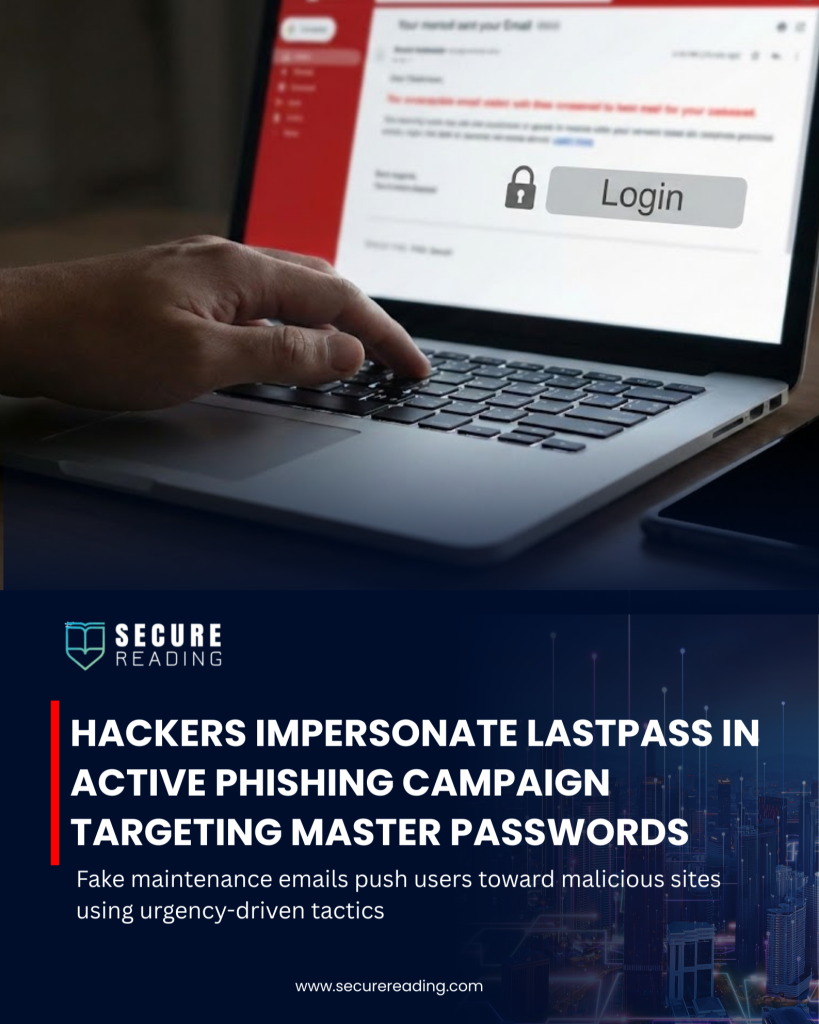
LastPass has warned users about an active phishing campaign that impersonates the password management service to steal master passwords.
The campaign began around January 19, 2026. Attackers send emails that claim an upcoming maintenance window and urge users to create a local backup of their password vault within 24 hours.
How the Phishing Campaign Works
The phishing emails use urgent language to pressure recipients into acting quickly. Common subject lines include:
- LastPass Infrastructure Update: Secure Your Vault Now
- Important: LastPass Maintenance & Your Vault Security
- Protect Your Passwords: Backup Your Vault (24-Hour Window)
When users click the links, they first land on a hosted page and then get redirected to a fake domain designed to look like a legitimate LastPass site. The attackers use this page to collect credentials.
What LastPass Says
LastPass stressed that it never asks users for their master passwords and does not demand immediate action under tight deadlines.
The company confirmed that it is working with external partners to shut down the malicious infrastructure. It also shared several email addresses linked to the campaign to help users identify suspicious messages.
According to LastPass, the attackers rely on urgency because it remains one of the most effective phishing techniques.
A Pattern of Brand Abuse
This incident follows earlier warnings from LastPass about malware campaigns that targeted users through fake software downloads and fraudulent repositories. In those attacks, threat actors also attempted to exploit user trust in the brand.
Together, these incidents show that password managers remain high-value targets for phishing operations.
What Users Should Do
LastPass advises users to stay cautious and remember key safety rules:
- Never share your master password
- Avoid clicking links in unsolicited security emails
- Verify maintenance notices directly through official channels
- Report suspicious messages immediately
Key Takeaway
Attackers continue to exploit trusted brands and urgency to bypass user awareness.
Phishing campaigns now focus on stealing the single password that unlocks everything.