

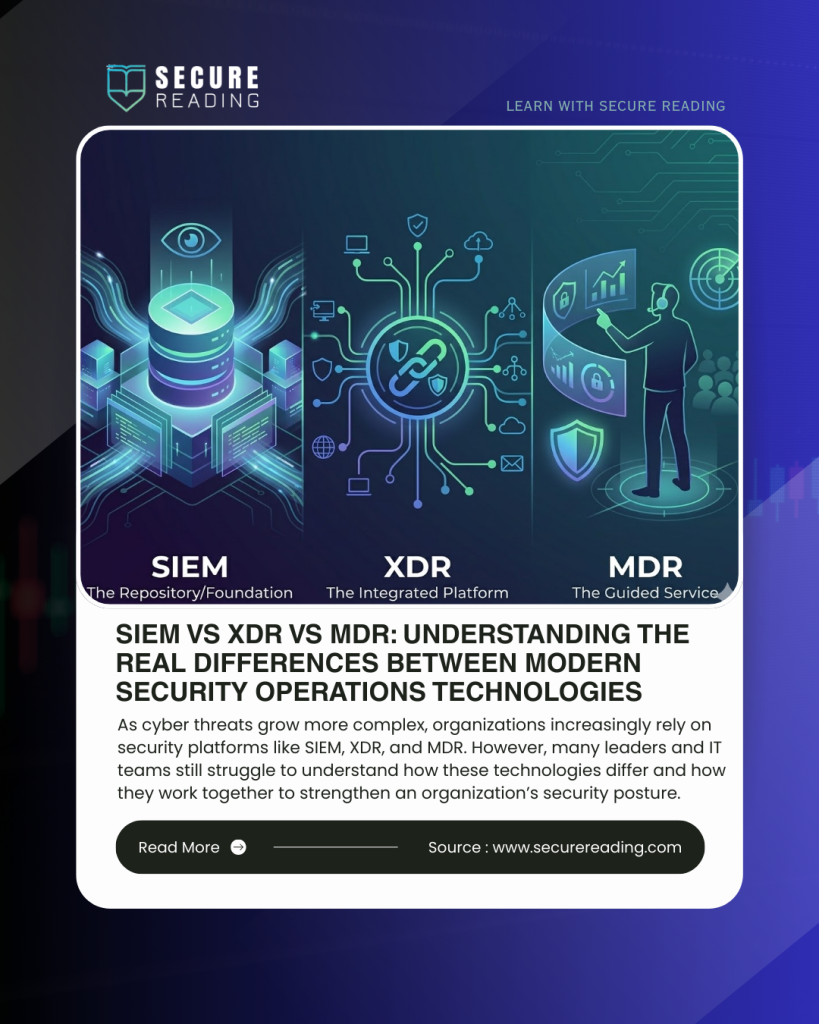
SIEM vs XDR vs MDR: Understanding the Real Differences Between Modern Security Operations Technologies
As cyber threats grow more complex, organizations increasingly rely on security platforms like SIEM, XDR, and MDR. However, many leaders and IT teams still struggle to understand how these technologies differ and how they work together to strengthen an organization’s security posture.
Cybersecurity platforms have evolved rapidly over the past decade. As a result, terms like SIEM, XDR, and MDR appear frequently in security discussions. While they all focus on threat detection and response, each plays a different role in protecting an organization’s digital environment.
Understanding the differences helps organizations make smarter decisions about security architecture, threat visibility, and incident response capabilities.
What Is SIEM?
SIEM (Security Information and Event Management) is a centralized platform that collects and analyzes security logs from across an organization’s infrastructure.
It aggregates data from sources such as:
- Firewalls
- Servers
- Applications
- Network devices
- Cloud platforms
The system then analyzes these logs to identify suspicious activity.
Key functions of SIEM include:
- Log collection and normalization
- Security event correlation
- Alert generation for suspicious activity
- Compliance reporting and audit visibility
SIEM platforms help security teams see what is happening across the entire environment. However, they usually require skilled analysts to investigate alerts and respond to threats.
What Is XDR?
XDR (Extended Detection and Response) is a more modern security technology designed to detect and respond to threats across multiple security layers.
Instead of analyzing logs alone, XDR integrates data from:
- Endpoints
- Networks
- Email systems
- Cloud services
- Identity platforms
By correlating activity across these systems, XDR helps identify complex attack patterns that traditional tools might miss.
Key advantages of XDR:
- Automated threat correlation
- Faster detection of advanced attacks
- Improved visibility across multiple security layers
- Integrated response capabilities
XDR focuses heavily on reducing alert fatigue and improving detection accuracy.
What Is MDR?
MDR (Managed Detection and Response) is not just a technology platform. It is a security service delivered by cybersecurity experts who monitor and respond to threats on behalf of an organization.
MDR providers typically operate 24/7 security operations centers (SOCs).
They combine tools such as:
- SIEM platforms
- XDR solutions
- Threat intelligence feeds
- Incident response capabilities
MDR services usually include:
- Continuous threat monitoring
- Threat hunting
- Incident investigation
- Containment and remediation support
For organizations that lack large internal security teams, MDR provides expert security operations without building an in-house SOC.
Key Differences Between SIEM, XDR, and MDR
In simple terms:
- SIEM collects and analyzes security data
- XDR detects threats across multiple systems
- MDR provides human expertise to monitor and respond to attacks
Why Organizations Often Use Them Together
Modern cybersecurity strategies often combine these technologies rather than choosing only one.
For example:
- SIEM provides centralized visibility
- XDR improves automated threat detection
- MDR delivers human expertise and response capability
Together, they create a stronger security operations framework capable of detecting and responding to modern cyber threats.
Choosing the Right Approach
The best solution depends on several factors:
- Size of the organization
- Internal security expertise
- Compliance requirements
- Threat landscape exposure
Large enterprises may operate SIEM and XDR platforms internally, while many organizations choose MDR services to gain access to experienced security analysts and 24/7 monitoring.
Final Thoughts
Cyber threats continue to evolve, making security visibility and rapid response more important than ever. Understanding the differences between SIEM, XDR, and MDR helps organizations build security strategies that combine technology, automation, and expert oversight.
Organizations that align these tools with their security operations strategy can significantly improve their ability to detect threats early, respond faster, and reduce the impact of cyber attacks.