

Why Small and Mid-Sized Businesses Are Now Prime Cyber Targets
Attackers no longer chase only big enterprises — today, small and mid-sized businesses offer the fastest path to profit.
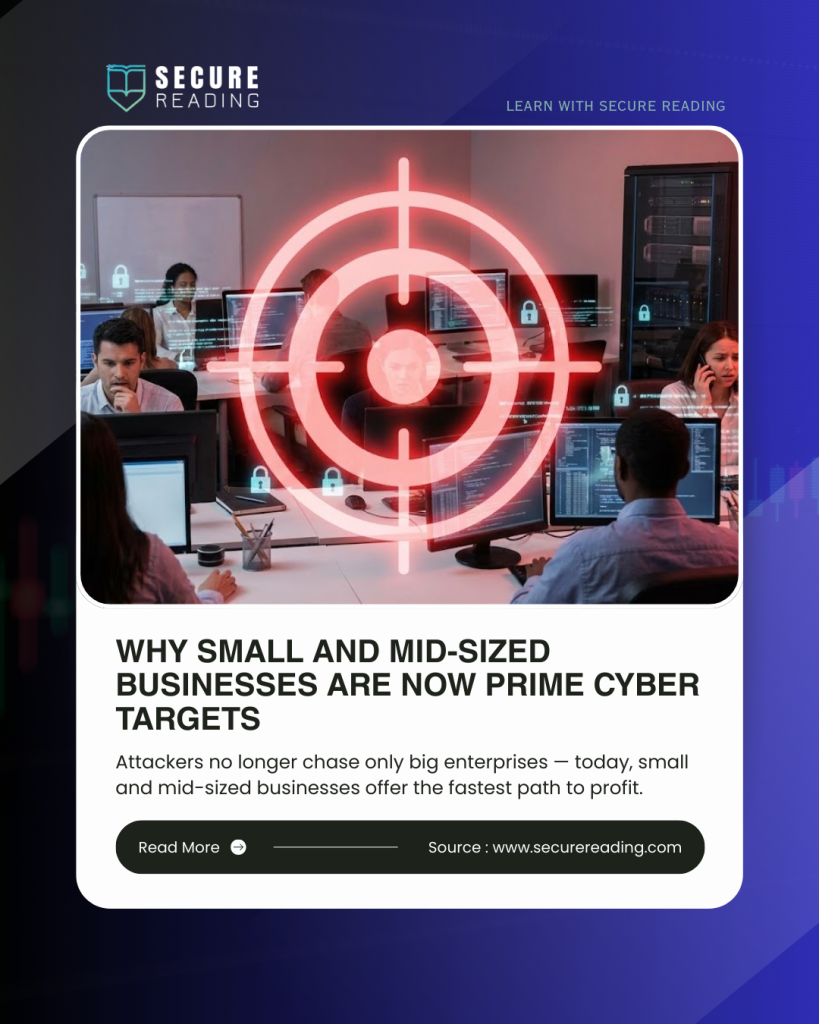
For a long time, small and mid-sized businesses believed cybercriminals only targeted large enterprises. However, that belief no longer reflects today’s threat landscape. In reality, attackers now see SMBs as faster, easier, and more profitable targets.
Large enterprises usually invest heavily in cybersecurity. They operate dedicated security teams, monitor threats continuously, and test defenses regularly. In contrast, many SMBs depend on basic security tools and limited IT resources. As a result, attackers face fewer obstacles and achieve quicker results.
Why Attackers Prefer SMBs
One major reason attackers target SMBs is efficiency. Instead of spending months bypassing enterprise defenses, attackers can compromise smaller businesses using simple techniques like phishing or credential abuse. Therefore, SMBs often become victims without attackers needing advanced exploits.
Additionally, many SMBs act as vendors or service providers for larger organizations. Consequently, attackers use them as stepping stones in supply-chain attacks. By breaching a smaller company, attackers can later access enterprise systems indirectly. Meanwhile, the SMB may remain unaware of the compromise.
Ransomware groups also prioritize SMBs. Smaller organizations often lack tested backups and incident response plans. When systems go down, operations stop immediately. As a result, attackers know SMBs are more likely to pay quickly to restore business continuity.
How Business Impact Extends Beyond IT
Cyberattacks affect far more than IT systems. Beyond financial loss, SMBs face reputational damage, customer distrust, regulatory pressure, and operational disruption. In many cases, recovery takes weeks or months. In severe situations, businesses never fully recover.
Cloud adoption adds another layer of risk. SMBs increasingly rely on cloud services for speed and flexibility. However, misconfigured storage, exposed APIs, and excessive permissions often go unnoticed. Therefore, attackers gain easy entry points without triggering alarms.
Overall, cybersecurity is no longer about company size. Instead, it is about exposure, visibility, and preparedness. SMBs that treat cybersecurity as a business risk — not just an IT issue — significantly reduce their chances of becoming targets.
The goal is not perfect security. Rather, it is resilience. When a business improves visibility, controls access, and trains employees, attackers often move on to easier targets.