

Technical Skills Got You Hired — Strategic Thinking Gets You Promoted in Cybersecurity
How security professionals move from “doers” to trusted decision-makers
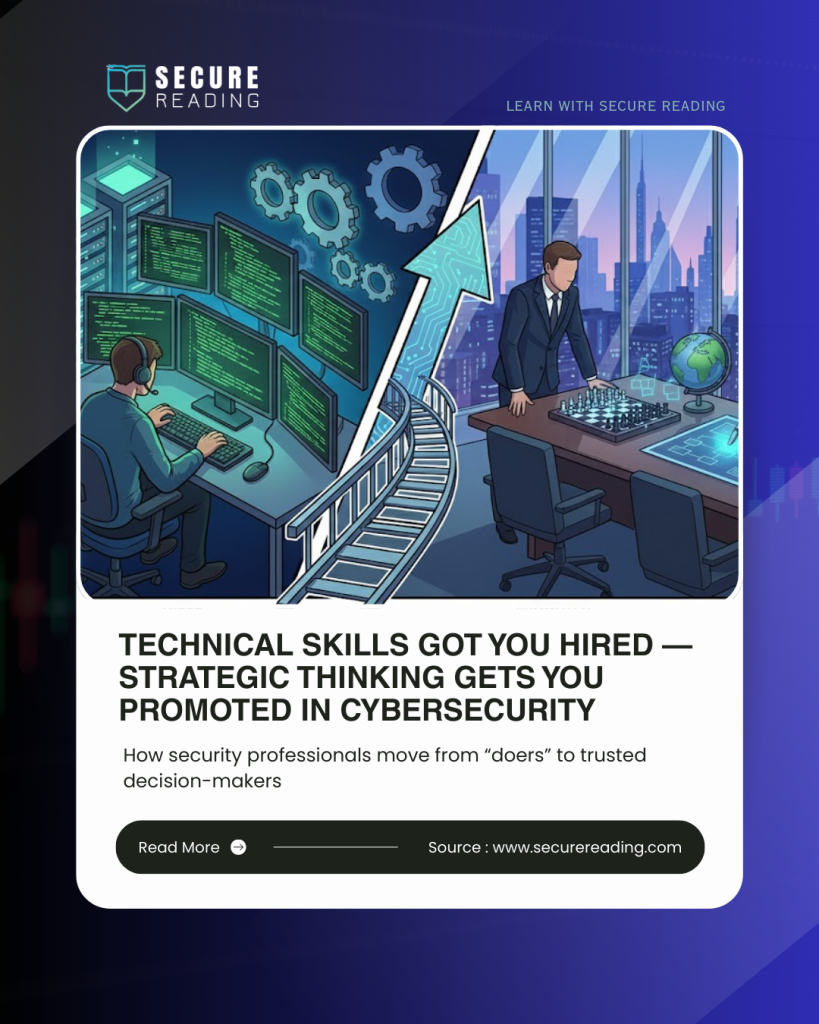
Many cybersecurity professionals build their careers by mastering tools, alerts, and technical workflows. These skills open doors and help secure the first few roles. However, as careers progress, technical excellence alone often stops being enough.
Promotion in cybersecurity increasingly depends on how well professionals think, not just what they can configure or detect.
Senior security roles demand the ability to connect technical findings to business impact. For example, identifying a misconfiguration matters less than explaining how it affects revenue, customer trust, or regulatory exposure. Professionals who consistently make this connection earn visibility and trust.
Effective practitioners also learn to prioritize risk instead of volume. Rather than reacting to every alert, they focus on issues that meaningfully reduce exposure. This shift from operational urgency to risk-based decision-making signals readiness for leadership.
Communication plays a central role. Professionals who can brief stakeholders clearly, document decisions, and justify trade-offs stand out quickly. Clear communication reduces friction, shortens decision cycles, and strengthens credibility.
Additionally, strong cybersecurity professionals think in systems. They understand how identity, cloud, applications, and monitoring interact. This broader perspective allows them to anticipate failures rather than respond after damage occurs.
Career growth accelerates when professionals stop measuring success by tasks completed and start measuring it by risk reduced and outcomes delivered.
In today’s environment, organizations need security leaders who can guide decisions, not just execute instructions. Those who develop strategic thinking alongside technical skills position themselves for senior roles and long-term career stability.