

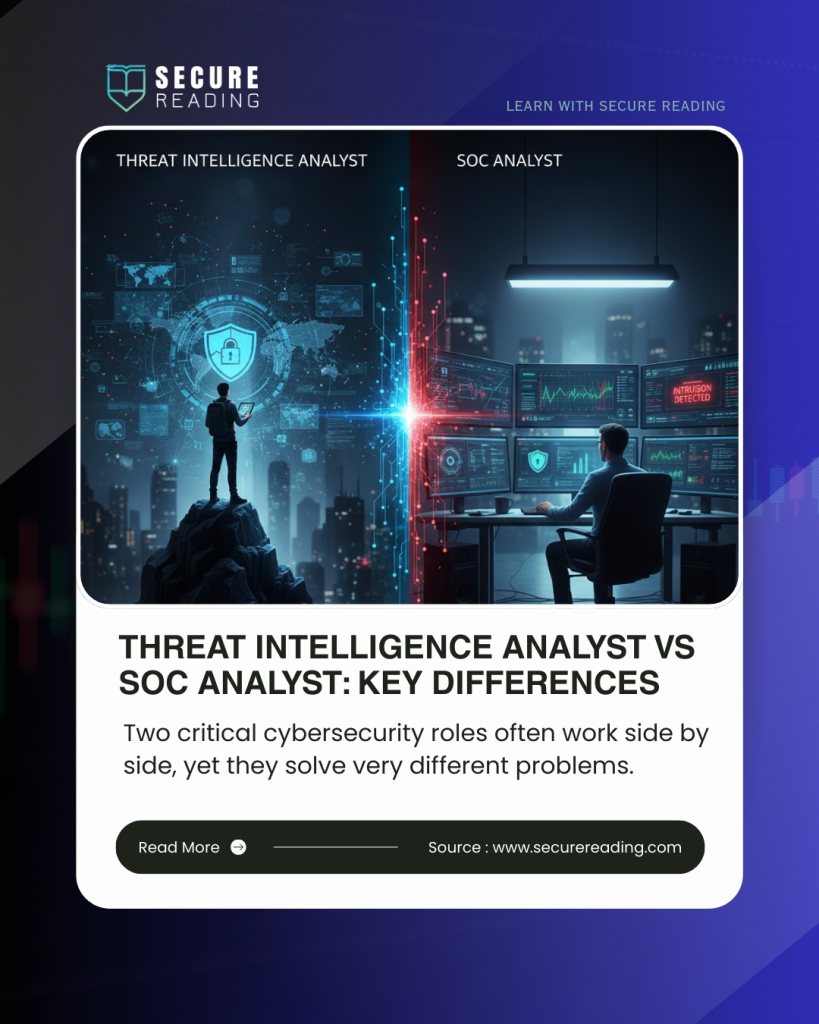
Threat Intelligence Analyst vs SOC Analyst: Key Differences
Two critical cybersecurity roles often work side by side, yet they solve very different problems.
Why This Comparison Matters
Many professionals entering cybersecurity hear about SOC Analysts and Threat Intelligence Analysts. The titles sound similar, and both handle adversaries daily. However, their missions, tools, and success metrics differ significantly.
Understanding the distinction helps you choose the right career path and build the skills that employers expect.
What a SOC Analyst Focuses On
A SOC Analyst protects the organization right now. The role centers on monitoring alerts, validating threats, and coordinating response.
Daily responsibilities typically include:
- Reviewing SIEM and EDR alerts
- Investigating suspicious activity
- Containing compromised hosts
- Escalating confirmed incidents
- Documenting findings for leadership
Speed and accuracy define success. Every minute matters because attackers may already be inside the network.
What a Threat Intelligence Analyst Focuses On
A Threat Intelligence Analyst concentrates on who might attack next and how. Instead of reacting to alarms, this role studies adversaries, campaigns, malware trends, and infrastructure patterns.
Common responsibilities include:
- Tracking threat actor behavior
- Producing intelligence reports
- Mapping tactics to defensive gaps
- Enriching alerts with context
- Supporting proactive hunting
The goal is foresight. Intelligence teams help organizations prepare before incidents occur.
Time Horizon: Reactive vs Predictive
SOC work operates in minutes and hours. Analysts triage what already triggered.
Threat intelligence operates in days and months. Analysts analyze trends, capabilities, and motivations to reduce future risk.
Both timelines matter. Without SOC response, damage spreads. Without intelligence, defenses stay blind to what is coming.
Tools of the Trade
SOC Analysts often use:
- SIEM platforms
- EDR/XDR consoles
- Case management systems
- Log analysis and forensic utilities
Threat Intelligence Analysts often use:
- TIP platforms
- OSINT and dark web sources
- Malware and infrastructure tracking
- Campaign mapping frameworks
Although overlap exists, the mindset behind each toolkit differs.
Output and Audience
SOC Analysts produce incident tickets, timelines, and containment actions. Their work supports technical teams and immediate remediation.
Threat Intelligence Analysts produce briefings, risk assessments, and strategic insights. Their audience often includes executives, risk managers, and security architects.
Skills That Separate the Roles
Strong SOC Analysts excel at:
- Pattern recognition
- Rapid decision-making
- Technical troubleshooting
- Understanding system behavior
Strong Threat Intelligence Analysts excel at:
- Research and analysis
- Writing and communication
- Connecting small signals into big pictures
- Understanding geopolitical or criminal ecosystems
If you love fast-paced operations, SOC might fit you. If you enjoy investigation and long-term patterns, intelligence may suit you better.
How the Roles Work Together
The best security programs connect both functions tightly.
Intelligence feeds help SOC teams prioritize alerts. Meanwhile, SOC investigations generate real-world data that refine intelligence assessments. This loop strengthens detection and improves resilience.
Career Growth Perspective
Many professionals start in the SOC because it builds foundational skills. From there, they may branch into threat hunting, incident response, detection engineering, or intelligence.
Neither path is superior. They simply address different dimensions of defense.
The Bottom Line
SOC Analysts fight the battle in front of them. Threat Intelligence Analysts study the enemy beyond the horizon.
Organizations need both to stay ahead of modern adversaries.