

UAE Cybersecurity Specialists Caution Travelers Against Fake Wi-Fi and Juice Jacking Attacks
Security experts in the UAE are warning travelers about rising cyber risks linked to public Wi-Fi networks and compromised charging stations.
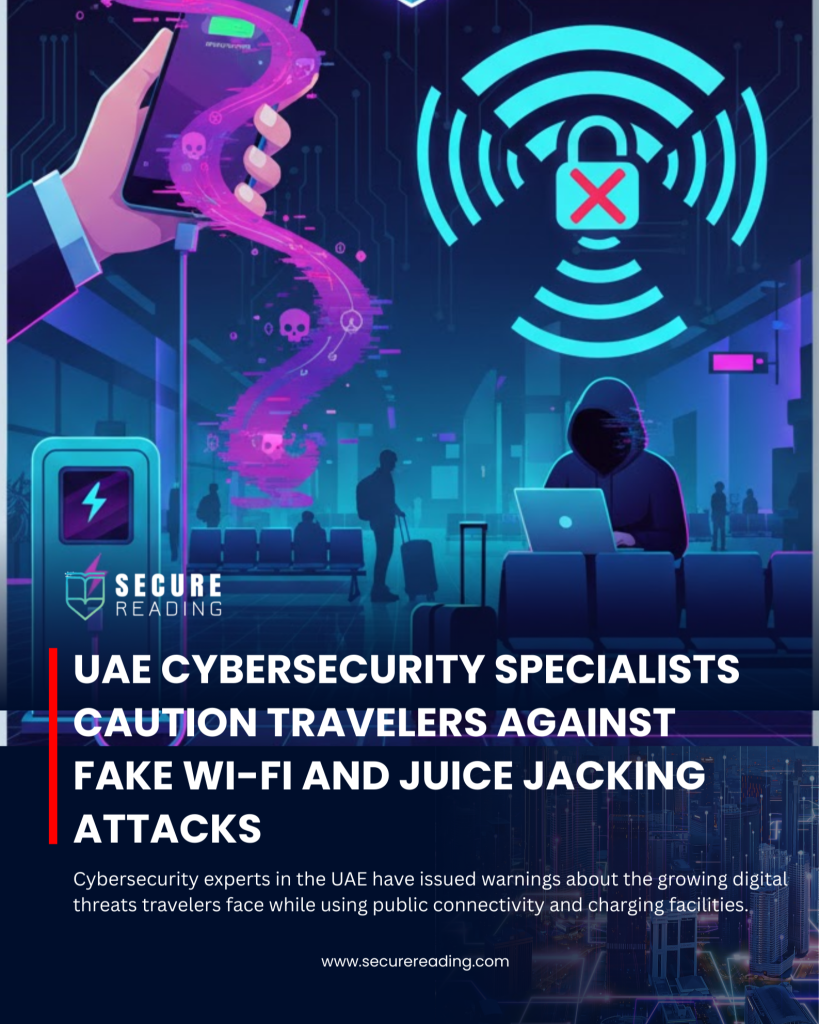
Cybersecurity experts in the UAE have issued warnings about the growing digital threats travelers face while using public connectivity and charging facilities. As travel activity increases, attackers continue to exploit moments when users rely on unfamiliar networks and shared infrastructure.
One of the most common risks involves fake Wi-Fi networks set up in airports, hotels, cafes, and public venues. Attackers create rogue hotspots that mimic legitimate network names. When travelers connect, attackers can intercept data, capture login credentials, and monitor online activity. As a result, sensitive information such as emails, passwords, and financial details becomes exposed.
Another major concern is juice jacking, a technique that abuses public USB charging ports. In these attacks, compromised charging stations deliver malicious code or extract data when a device is connected. Although the attack requires physical access, travelers often overlook the risk due to low battery urgency. Consequently, attackers gain a direct pathway to mobile devices.
UAE cybersecurity professionals emphasize that travelers frequently lower their security awareness during trips. People connect to open networks quickly, disable protections for convenience, and delay software updates. Therefore, attackers view travelers as high-value, low-resistance targets.
Experts warn that these threats can lead to account compromise, identity theft, and even corporate data exposure. Employees traveling for work face additional risks if attackers access enterprise email or cloud applications. In some cases, a single compromised device can provide a foothold into organizational networks.
To reduce risk, experts advise travelers to avoid public Wi-Fi whenever possible. Using personal hotspots or trusted mobile data connections offers better protection. Additionally, travelers should carry charging adapters or power banks instead of relying on public USB ports. Keeping devices updated and enabling strong authentication further reduces exposure.
Overall, the warnings highlight a growing reality. Cyber threats now extend beyond offices and homes into everyday travel environments. Awareness, preparation, and basic security hygiene remain the most effective defenses for travelers in an increasingly connected world.