

U.S. Sanctions Iranian Crypto Exchange Nobitex Over Ransomware and Terror Financing Links
Nobitex faces U.S. sanctions after authorities linked the exchange to ransomware payments, sanctions evasion, and transactions connected to Iranian state-backed entities.
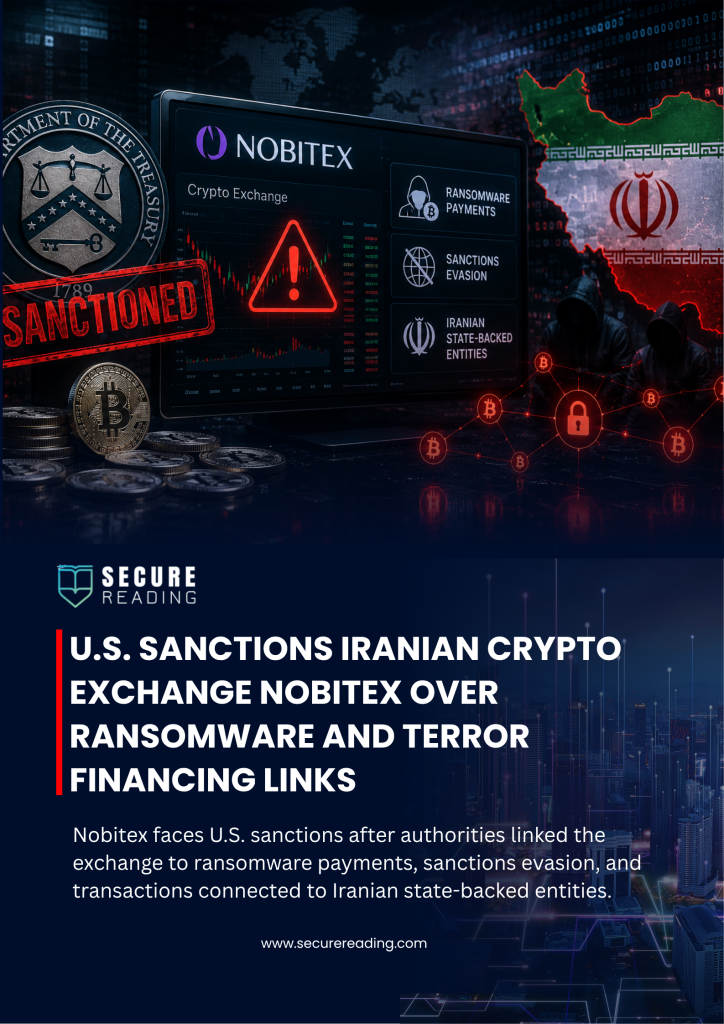
The United States has sanctioned Nobitex, Iran’s largest cryptocurrency exchange, over allegations that it facilitated ransomware payments, supported sanctions evasion, and enabled transactions linked to Iranian state-connected organizations.
The move highlights the growing role of cryptocurrency platforms in global cybersecurity investigations. It also demonstrates how governments are targeting financial networks that support cybercrime and illicit activities.
Why the U.S. Targeted Nobitex
U.S. authorities claim that Nobitex played a significant role in Iran’s cryptocurrency ecosystem. Investigators believe the exchange processed a large share of the country’s digital asset transactions during 2025.
Officials allege that the platform supported transactions linked to terrorist financing and organizations connected to the Islamic Revolutionary Guard Corps (IRGC). Authorities also identified cryptocurrency wallets associated with ransomware actors who allegedly maintained ties to IRGC-linked networks.
As a result, regulators placed the exchange under sanctions and increased pressure on entities connected to its operations.
Alleged Role in Sanctions Evasion
Authorities also accuse Nobitex of helping sanctioned individuals and organizations access international cryptocurrency markets.
Investigators believe the platform enabled users to move funds across multiple jurisdictions. They also claim that the exchange supported access to stablecoins and other digital assets despite international restrictions.
These allegations have raised concerns about how digital assets can help entities bypass traditional financial controls.
Executives and Other Exchanges Face Action
The sanctions extend beyond Nobitex itself. U.S. authorities also designated several executives and founders associated with the exchange.
In addition, authorities included three other Iranian cryptocurrency exchanges in the broader enforcement action. These platforms include Wallex, Bitpin, and Ramzinex.
The coordinated action reflects a wider effort to disrupt financial networks that authorities believe support sanctioned activities.
Ransomware Connections Raise Cybersecurity Concerns
One of the most significant aspects of the sanctions involves alleged links between Nobitex and ransomware operations.
Authorities identified cryptocurrency wallets connected to ransomware groups that reportedly maintained relationships with IRGC-linked networks. These findings reinforce concerns about how cybercriminals use cryptocurrency to receive and move illicit funds.
Cybersecurity experts have long warned that ransomware groups rely heavily on digital assets. Cryptocurrency allows threat actors to move funds quickly across borders and complicates traditional financial investigations.
Impact on the Cryptocurrency Industry
The sanctions freeze any assets under U.S. jurisdiction that belong to the designated entities and individuals. They also prohibit U.S. citizens and organizations from conducting business with them.
However, the impact often reaches far beyond the United States. Many international companies avoid sanctioned entities to reduce regulatory and reputational risks. Financial institutions and cryptocurrency providers often follow the same approach.
As a result, sanctioned exchanges can lose access to critical parts of the global financial ecosystem.
Increased Scrutiny of Crypto Platforms
Governments around the world continue to increase oversight of cryptocurrency exchanges. Regulators now focus heavily on anti-money laundering controls, sanctions compliance, and transaction monitoring.
The action against Nobitex reflects this broader trend. Authorities no longer focus only on threat actors. They also target the financial platforms that may enable cybercriminal activity.
For cybersecurity leaders, this development highlights an important reality. Ransomware is no longer only a technical problem. It is also a financial and geopolitical challenge that affects governments, businesses, and critical infrastructure.
What Happens Next
The sanctions place significant pressure on Nobitex and the wider Iranian cryptocurrency ecosystem. They may also encourage additional investigations into exchanges that authorities suspect of facilitating illicit transactions.
Governments will likely continue expanding enforcement efforts against platforms linked to cybercrime, ransomware payments, and sanctions evasion.
As cyber threats become more financially driven, regulators and law enforcement agencies will increasingly focus on disrupting the payment networks that enable these operations. The latest action against Nobitex demonstrates that cryptocurrency platforms remain a key battleground in the fight against cybercrime.