

What Is GRC in Cybersecurity and Risk Management? Understanding Governance, Risk, and Compliance for Modern Organizations
Why Governance, Risk, and Compliance (GRC) Is Becoming Essential for Businesses Managing Cybersecurity, Regulatory, and Operational Risks
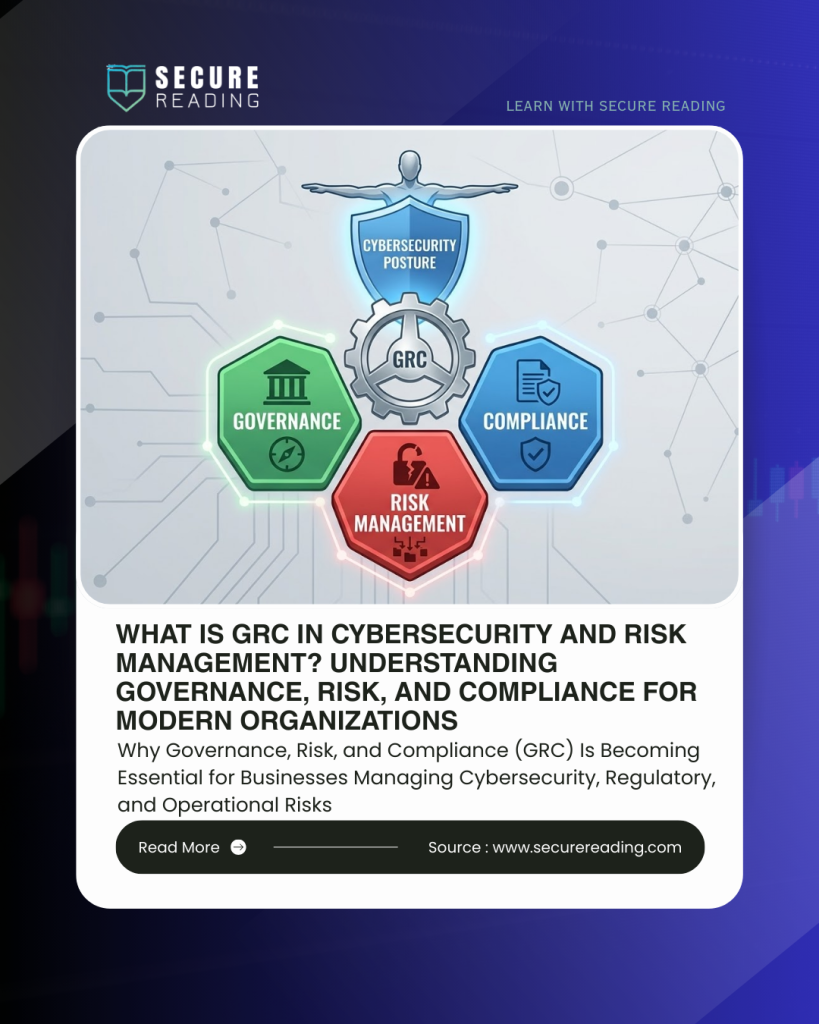
Organizations today operate in a complex environment filled with cyber threats, strict regulations, and operational risks. As businesses grow and adopt digital technologies, they must manage security, compliance, and risk in a structured way.
This is where GRC — Governance, Risk, and Compliance — becomes critical.
GRC helps organizations create clear policies, manage risks effectively, and ensure they comply with legal and regulatory requirements.
What Is GRC?
GRC stands for Governance, Risk, and Compliance. It is a structured approach that helps organizations align business objectives, risk management, and regulatory compliance.
The three components work together:
Governance
Governance defines how an organization is managed and controlled. It ensures leadership sets clear policies, responsibilities, and decision-making structures.
Examples include:
- Security policies
- Corporate governance frameworks
- Internal control systems
Governance ensures that the organization operates according to defined standards and strategic objectives.
Risk Management
Risk management focuses on identifying, analyzing, and reducing risks that could affect business operations.
These risks may include:
- Cybersecurity threats
- Financial risks
- Operational disruptions
- Third-party or supply-chain risks
Organizations use risk assessments and risk mitigation strategies to reduce potential damage and maintain stability.
Compliance
Compliance ensures that organizations follow laws, regulations, and industry standards.
Examples include:
- Data protection regulations
- Financial regulations
- Industry security frameworks
Compliance programs help organizations avoid legal penalties, financial losses, and reputational damage.
How GRC Helps Organizations Manage Risk and Improve Security
Implementing GRC brings several important benefits for organizations.
Better Risk Visibility
GRC frameworks help organizations identify and monitor risks across the entire business environment.
Instead of reacting to problems, companies can detect risks early and respond proactively.
Stronger Cybersecurity Governance
Many organizations integrate GRC with cybersecurity programs.
This helps security teams:
- Align security policies with business objectives
- Track vulnerabilities and risks
- Improve incident response planning
As a result, organizations build stronger security governance structures.
Regulatory Compliance
Businesses must comply with many regulations and standards. GRC platforms help organizations manage these requirements efficiently.
Common frameworks include:
- ISO 27001
- NIST Cybersecurity Framework
- GDPR
- PCI DSS
GRC tools track compliance requirements and ensure organizations meet regulatory obligations.
Improved Decision Making
GRC provides leadership with better visibility into risks and controls.
Therefore, executives can make informed decisions based on real risk data instead of assumptions.
Operational Efficiency
Without GRC, many organizations manage compliance through spreadsheets and disconnected tools.
GRC platforms automate processes such as:
- Risk assessments
- Policy management
- Compliance audits
Consequently, organizations reduce manual work and improve efficiency.
What Does a GRC Professional Do?
A GRC professional focuses on managing governance, risk, and compliance activities within an organization.
Typical responsibilities include:
- Conducting risk assessments
- Developing security policies
- Ensuring regulatory compliance
- Supporting internal and external audits
- Monitoring security controls
- Managing third-party risks
GRC professionals often work closely with security teams, legal teams, and business leadership.
Is GRC a Good Career Option in Cybersecurity?
Yes, GRC is a strong and growing career path within cybersecurity.
Many organizations struggle to manage regulations and risk management requirements. As a result, the demand for GRC professionals continues to increase.
Why GRC Is a Good Career Choice
High demand across industries
Companies in finance, healthcare, government, and technology all need GRC professionals.
Less technical compared to other security roles
GRC focuses more on policy, risk management, and governance, making it suitable for people who prefer strategic roles rather than deep technical work.
Global career opportunities
GRC frameworks are used worldwide, which means professionals can work in many countries.
Path to leadership roles
Many security leaders, including Chief Information Security Officers (CISOs), come from GRC backgrounds.
Skills Needed for a Successful GRC Career
To succeed in GRC, professionals need a mix of technical knowledge, risk management understanding, and communication skills.
Important skills include:
- Risk assessment and analysis
- Security frameworks knowledge
- Policy development
- Regulatory compliance knowledge
- Audit and control evaluation
- Communication and documentation skills
Certifications can also help build a strong career.
Common certifications include:
- CISA (Certified Information Systems Auditor)
- CRISC (Certified in Risk and Information Systems Control)
- CISSP (Certified Information Systems Security Professional)
- ISO 27001 Lead Implementer
Final Thoughts
Governance, Risk, and Compliance has become a core part of modern cybersecurity and business management. Organizations rely on GRC to manage risks, maintain regulatory compliance, and improve decision making.
At the same time, the growing importance of cybersecurity and regulations has made GRC one of the most promising career paths in the security industry.
For professionals interested in risk management, compliance frameworks, and strategic security roles, GRC offers strong long-term career opportunities.